Lactic acid for skin is an alpha hydroxy acid (AHA) used in cosmetic formulas and, in clinics, as a superficial peeling agent. [1, 2] In small, older studies, lotions and creams at 5% to 12% reduced dryness and produced a modest improvement in sun-damaged facial skin. [3, 4] Irritation and sun sensitivity are the known limits of this class. [1, 5]
In this article
- What is lactic acid in skin care?
- What are the benefits of lactic acid for skin?
- How do you use lactic acid on your face?
- What should you expect?
- Does lactic acid make your skin sensitive to the sun?
- What can you combine it with?
- Who should be careful?
- What should you check when choosing and storing it?
- Frequently asked questions
- References
What is lactic acid in skin care?
Lactic acid is, together with glycolic acid, one of the most used alpha hydroxy acids (AHAs). It appears in cosmetic formulas and is used in dermatology as a superficial peeling agent. [1, 2] This guide covers only lactic acid on the skin; lactic acid in muscles or blood is a different topic.
Reviews describe AHA uses from moisturization to acne, mostly through glycolic acid, [7] and note that the vehicle (formula base) shapes the results. [8] For the glycolic side, see the glycolic acid guide.
Lactic acid exists in two mirror-image forms, L and D. In a small 1996 study combining laboratory and short human tests, a lotion with L-lactic acid raised ceramides (lipids) in the stratum corneum, the outermost skin layer, by 48%, a D,L mixture by 25%, and the D form had no effect. [9] The abstract gives no participant number, concentration or pH.
Lactic acid vs glycolic acid: what’s the difference?
One study compared the two acids under home-use conditions. 74 women aged 40 to 70 with sun-damaged facial skin used an 8% glycolic acid cream, an 8% L-lactic acid cream or the vehicle (the same base without active ingredient) twice a day for 22 weeks. At least one grade of facial improvement was seen in 76% with glycolic acid, 71% with lactic acid and 40% with the vehicle. On the forearm, only glycolic acid beat the vehicle. [4]
“Lactic acid is gentler” is a common belief, but no study in our sources tested it for home products. In physician-applied peels, side effects were most frequent with a 20% glycolic peel versus a 15% lactic peel; that clinic result does not transfer to home products. [10]
What are the benefits of lactic acid for skin?
The studies on lactic acid skin benefits are few, small and mostly from the 1980s and 1990s. The most consistent findings concern dryness and the texture of sun-damaged skin; for dark spots and acne there is no home-product study specific to lactic acid. Claims such as “repairs the barrier” or “fades spots” go beyond these data.
Hydration and the skin barrier
In a double-blind study, 60 patients with moderate to severe dry skin applied a neutralized 12% lactate lotion, a 5% lactic acid lotion or a lactate-free emollient lotion to their legs for 21 days. All three significantly reduced the dryness score; 1 to 2 weeks after stopping, the 12% lactate lotion limited the return of dryness better than the other two. [3] It dates from 1983 and used leg skin with disease-level dryness.
In the 1996 study above, skin treated with L-lactic acid or the D,L mixture showed significantly better barrier function and resistance to dryness in an irritation test with sodium lauryl sulfate (SLS, a foaming surfactant); the D form did not. [9] A barrier review states in general terms that acidic moisturizers may support ceramide production; it is not specific to lactic acid. [11] More in the skin barrier guide.
Sun damage and fine lines
In the 22-week trial, the 8% lactic acid cream gave a modest benefit, in the authors’ own words, in some signs of facial sun damage compared with the vehicle, and both creams were well tolerated. [4] The study came from a single center, included only women and tested a single formula.
In another study, participants applied 5% or 12% lactic acid twice daily for 3 months. At 12%, firmness and thickness increased in the epidermis and dermis, with clinical improvement in smoothness and the appearance of lines; at 5%, there was no dermal change, but similar clinical and epidermal changes were recorded. [12] The abstract omits participant number, body site and placebo arm.
A forearm pilot study of 25% AHA lotions (glycolic, lactic or citric) reported about 25% more skin thickness, but the acids were pooled and 25% exceeds the cosmetic ceiling. [13] See the wrinkles guide.
Dark spots and uneven tone
A systematic review of 47 studies on post-inflammatory hyperpigmentation lists hydroxy acids as a class among the agents with high-quality studies, with no lactic-acid-specific result; nearly every study recommended SPF 30 or higher. [14] A physician-applied 15% lactic peel gave more than 50% improvement in 56.67% of patients with constitutional dark circles, with no placebo group. [10] No study in our sources measured a lactic acid home product on spots. More in the dark spots guide.
Acne-prone skin
The acne data come from two small studies without control groups, both using multi-ingredient formulas. 50 Japanese women with mild to moderate acne used a serum with 2% niacinamide, 1% lactic acid and 0.2% salicylic acid for 8 weeks; in the 46 evaluated, inflammatory lesions fell versus baseline. [15] In 27 women, a serum with 10.4% L-lactic acid, 2% salicylic acid and a retinoid derivative significantly reduced lesion counts by week 4. [16] In both, the effect cannot be attributed to lactic acid. Acne is a skin condition: see a dermatologist, and read the acne guide.
How do you use lactic acid on your face?
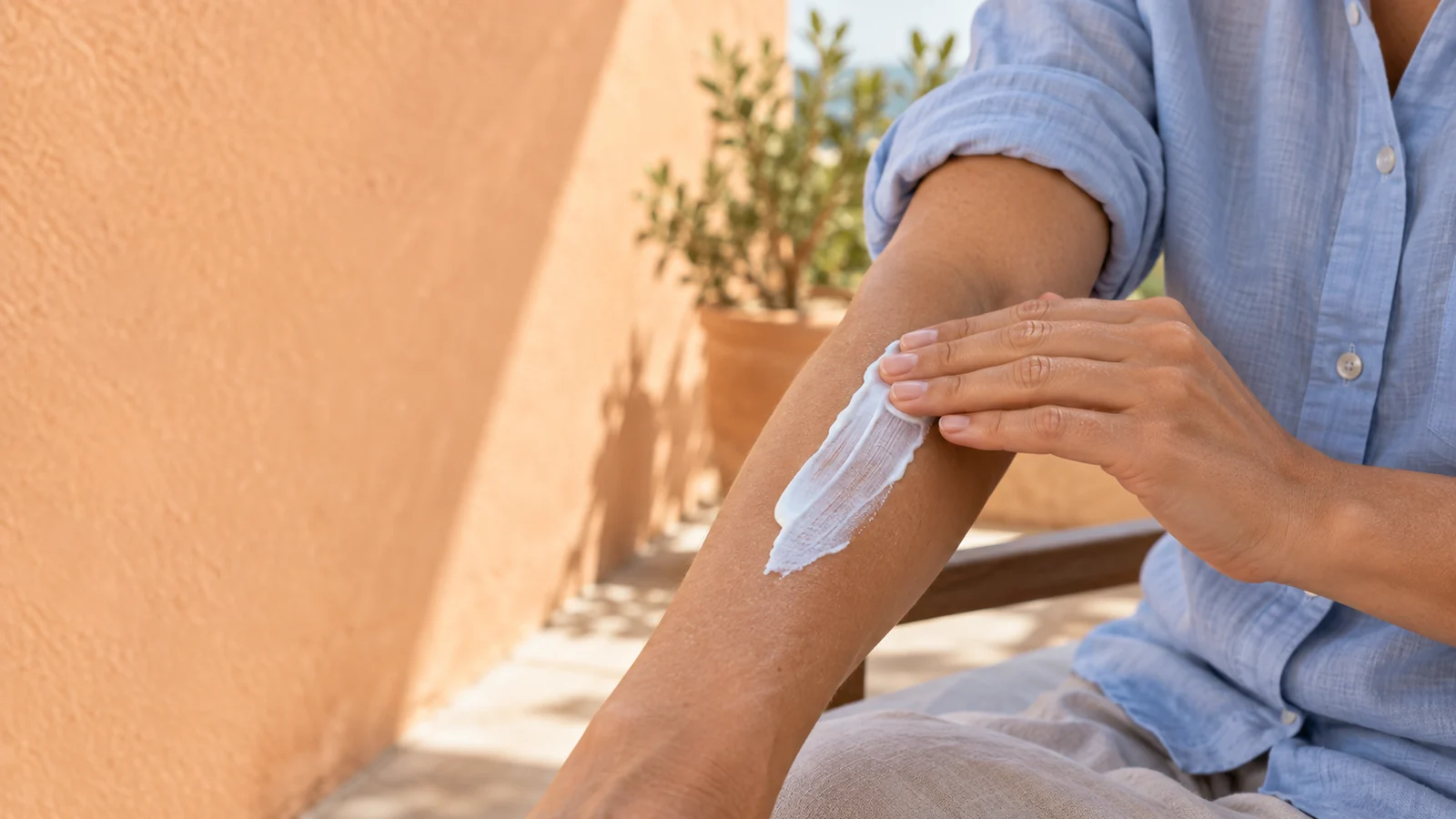
In practice, a lactic acid product goes on clean, dry skin in a thin layer, two or three evenings a week to start, with frequency increased as your skin adapts. Studies applied the products twice a day; that is study information, not a recommendation. [4, 12] The best concentrations with the fewest side effects are not established, so higher is not automatically better. [2]
- Patch test first. Try it along the jaw for a few evenings.
- Start with one acid. Do not add a second exfoliating product.
- Follow with a moisturizer. See the moisturizer guide.
- Use sunscreen every morning. See the sun sensitivity section.
Serum, cream or lotion?
No study in our sources compared product types: the trials used creams and lotions, none a serum. In practice, serums are lighter and made for the face, lotions for the body, creams for drier skin; the labeled percentage matters more than the format.
What percentage has been studied?
As study information: 5% and 12% lactic acid for 3 months, [12] 8% L-lactic acid for 22 weeks, [4] and neutralized 12% lactate alongside 5% lactic acid for 21 days. [3] The 12% lactate is a neutralized formula, not directly comparable with the acid form. The Cosmetic Ingredient Review (CIR) Expert Panel named 10% as the highest safe AHA concentration in cosmetics. [5] Our sources give no lactic-acid-specific pH value; reviews only say that guidelines recommend certain concentration and pH levels to limit irritation. [2]
Morning or night, and how often?
In practice, evening use is common, and daytime use makes sunscreen even more important. Two or three times a week is a reasonable start; reduce the frequency if you notice stinging or flaking.
What about a lactic acid peel?
A lactic acid peel is a superficial chemical peel performed by a physician, who chooses the acid, its concentration and the frequency according to the target depth and your skin’s condition. [17] In the clinic study above, a 15% lactic peel was applied every 3 weeks. [10] This page gives no at-home peel instructions, percentages or contact times; see the chemical peel guide.
What should you expect?
Mild stinging or tingling in the first days is common. Because AHA products have been linked to swelling, burning and itching, stop if those symptoms build rather than fade. [1] In the 22-week trial, the creams were well tolerated, and one participant left because of irritation. [4] The timelines below come from studies, not a personal schedule.
| Time | What the study measured | Limit |
|---|---|---|
| 21 days | Lower dryness score [3] | Legs, patients with dry skin |
| 3 months | Smoother skin, softer lines at 12% [12] | No participant number |
| 22 weeks | At least one grade of improvement in sun damage (71%) [4] | Women only, one formula |
A smoother feel may come within weeks; changes in fine lines take months. Peeling, lasting redness or burning is not an adjustment phase: stop the product and see a dermatologist if it does not settle.
Does lactic acid make your skin sensitive to the sun?
This has not been measured directly with lactic acid; it was shown within the AHA class with glycolic acid. When 29 fair-skinned volunteers applied 10% glycolic acid to their backs for 4 weeks, sensitivity to UV light increased: sunburn cells rose and the lowest UV dose that caused redness fell. One week after stopping, the difference was gone. [18]
Some regulators, including the FDA, have recommended that AHA cosmetics carry a sunburn warning. [5] Whether AHAs increase or reduce sun damage overall is described as unclear in one review. [1] Practical advice: apply a broad-spectrum sunscreen every morning and reapply during the day; see the sunscreen guide.
What can you combine it with?
The studies that paired lactic acid with other actives tested a single formula, not two products layered. [15, 16] The table below is practical guidance, not a tested compatibility list. Urea, a common partner in body lotions, has its own guide.
| Ingredient | Practical approach |
|---|---|
| Moisturizers, hyaluronic acid | After the acid step; helps offset dryness |
| Salicylic acid | Studied in one formula; two products layered may add irritation |
| Retinol | Alternate nights; details in using retinol with AHA/BHA |
| Vitamin C | In practice, vitamin C in the morning and the acid at night |
Who should be careful?
AHA products call for care because swelling, burning and itching have been reported, [1] and the best concentrations with the fewest side effects are still not defined. [2] A damaged or peeling barrier, recent clinic treatment, and active eczema or rosacea call for a dermatologist’s assessment first.
Is lactic acid OK for sensitive skin?
No study in our sources tested lactic acid in people defined as having sensitive skin, and the “gentler acid” belief is not a measured finding. AHA products have caused burning and itching, which sensitive skin notices sooner. [1] A practical route is a low percentage, a patch test and once-a-week use at first; stop if stinging or redness persists.
Pregnancy and breastfeeding
No study in our sources covers lactic acid home products in pregnancy or breastfeeding. A clinical review notes that most skincare products act locally and reach very low levels in the body, with some exceptions. [6] A review of cosmetic procedures found no controlled studies and, from case data, considered clinic glycolic and lactic acid peels acceptable while calling for better evidence; that is procedure context, not home-product data. [19] This page does not call lactic acid “safe” in pregnancy: discuss the product with your clinician, and read the pregnancy skincare guide.
What should you check when choosing and storing it?
A clearly stated percentage is the first thing to look for. Among 50 AHA products sold on one large e-commerce site, concentrations ranged from 2.5% to 70%; 19 products exceeded the recommended level, 12 gave no concentration at all, and a sunburn warning appeared on only 16 of the 50 product pages. [5]
Avoid products that hide the percentage or go far above 10%; keep the container closed, cool and away from light, and watch the expiry date.
Frequently asked questions
Is lactic acid good for dry skin?
Partly: an older leg study found less dryness, and barrier data come from a short lab-and-human study. In 60 patients, a 12% lactate lotion and a 5% lactic acid lotion both lowered dryness scores over 21 days. [3] L-lactic acid also improved barrier function and resistance to dryness after an SLS irritation test. [9]
Is lactic acid good for young skin?
No study in our sources looked at younger skin specifically. The sun-damage trial enrolled women aged 40 to 70, and the dryness study treated patients with a skin condition. Without dryness, roughness or breakouts, there is no documented reason to use an acid.
What does a lactic acid serum do for skin?
The studies used creams and lotions, not serums, so a serum has not been measured as such. An 8% cream improved sun-damaged skin modestly over 22 weeks, [4] and 12% applied for 3 months improved smoothness and the look of lines. [12]
References
- Tang SC, Yang JH. Dual Effects of Alpha-Hydroxy Acids on the Skin. Molecules. 2018;23(4). PubMed · DOI
- Almeman AA. Evaluating the Efficacy and Safety of Alpha-Hydroxy Acids in Dermatological Practice: A Comprehensive Clinical and Legal Review. Clin Cosmet Investig Dermatol. 2024;17:1661-1685. PubMed · DOI
- Dahl MV, Dahl AC. 12% lactate lotion for the treatment of xerosis. A double-blind clinical evaluation. Arch Dermatol. 1983;119(1):27-30. PubMed
- Stiller MJ, Bartolone J, Stern R, et al. Topical 8% glycolic acid and 8% L-lactic acid creams for the treatment of photodamaged skin. A double-blind vehicle-controlled clinical trial. Arch Dermatol. 1996;132(6):631-636. PubMed
- Krstonošić V, Ćirin D. Are cosmetics based on alpha hydroxy acids safe to use when purchased over the internet? Toxicol Ind Health. 2022;38(12):835-838. PubMed · DOI
- Bozzo P, Chua-Gocheco A, Einarson A. Safety of skin care products during pregnancy. Can Fam Physician. 2011;57(6):665-667. PubMed
- Babilas P, Knie U, Abels C. Cosmetic and dermatologic use of alpha hydroxy acids. J Dtsch Dermatol Ges. 2012;10(7):488-491. PubMed · DOI
- Kornhauser A, Coelho SG, Hearing VJ. Applications of hydroxy acids: classification, mechanisms, and photoactivity. Clin Cosmet Investig Dermatol. 2010;3:135-142. PubMed · DOI
- Rawlings AV, Davies A, Carlomusto M, et al. Effect of lactic acid isomers on keratinocyte ceramide synthesis, stratum corneum lipid levels and stratum corneum barrier function. Arch Dermatol Res. 1996;288(7):383-390. PubMed · DOI
- Dayal S, Sahu P, Jain VK, Khetri S. Clinical efficacy and safety of 20% glycolic peel, 15% lactic peel, and topical 20% vitamin C in constitutional type of periorbital melanosis: a comparative study. J Cosmet Dermatol. 2016;15(4):367-373. PubMed · DOI
- Rajkumar J, Chandan N, Lio P, Shi V. The Skin Barrier and Moisturization: Function, Disruption, and Mechanisms of Repair. Skin Pharmacol Physiol. 2023;36(4):174-185. PubMed · DOI
- Smith WP. Epidermal and dermal effects of topical lactic acid. J Am Acad Dermatol. 1996;35(3 Pt 1):388-391. PubMed · DOI
- Ditre CM, Griffin TD, Murphy GF, et al. Effects of alpha-hydroxy acids on photoaged skin: a pilot clinical, histologic, and ultrastructural study. J Am Acad Dermatol. 1996;34(2 Pt 1):187-195. PubMed · DOI
- Tan MG, Kim WB, Jo CE, Nabieva K, Kirshen C, Ortiz AE. Topical treatment for postinflammatory hyperpigmentation: a systematic review. J Dermatolog Treat. 2022;33(5):2518-2526. PubMed · DOI
- Igarashi A, Abe M, Gunji Y, et al. Evaluation of a Dermocosmetic Serum Containing a Multi-acid Complex and Niacinamide in Japanese Women with Mild Acne. J Clin Aesthet Dermatol. 2025;18(4):41-43. PubMed
- Draelos Z, Lewis J, McHugh L, Pellegrino A, Popescu L. Novel retinoid ester in combination with salicylic acid for the treatment of acne. J Cosmet Dermatol. 2016;15(1):36-42. PubMed · DOI
- Fischer TC, Perosino E, Poli F, Viera MS, Dreno B, Cosmetic Dermatology European Expert Group. Chemical peels in aesthetic dermatology: an update 2009. J Eur Acad Dermatol Venereol. 2010;24(3):281-292. PubMed · DOI
- Kaidbey K, Sutherland B, Bennett P, et al. Topical glycolic acid enhances photodamage by ultraviolet light. Photodermatol Photoimmunol Photomed. 2003;19(1):21-27. PubMed · DOI
- Trivedi MK, Kroumpouzos G, Murase JE. A review of the safety of cosmetic procedures during pregnancy and lactation. Int J Womens Dermatol. 2017;3(1):6-10. PubMed · DOI