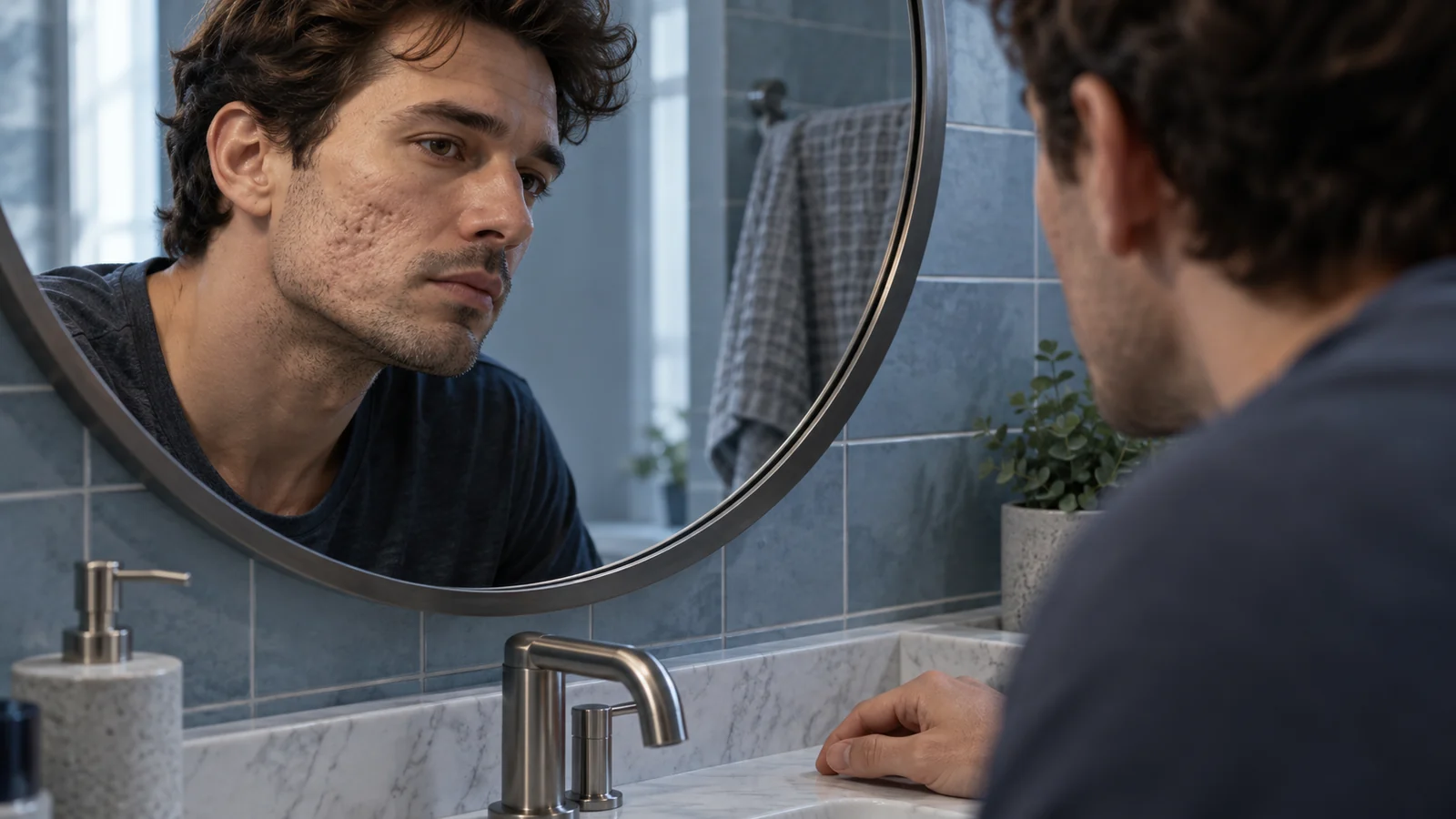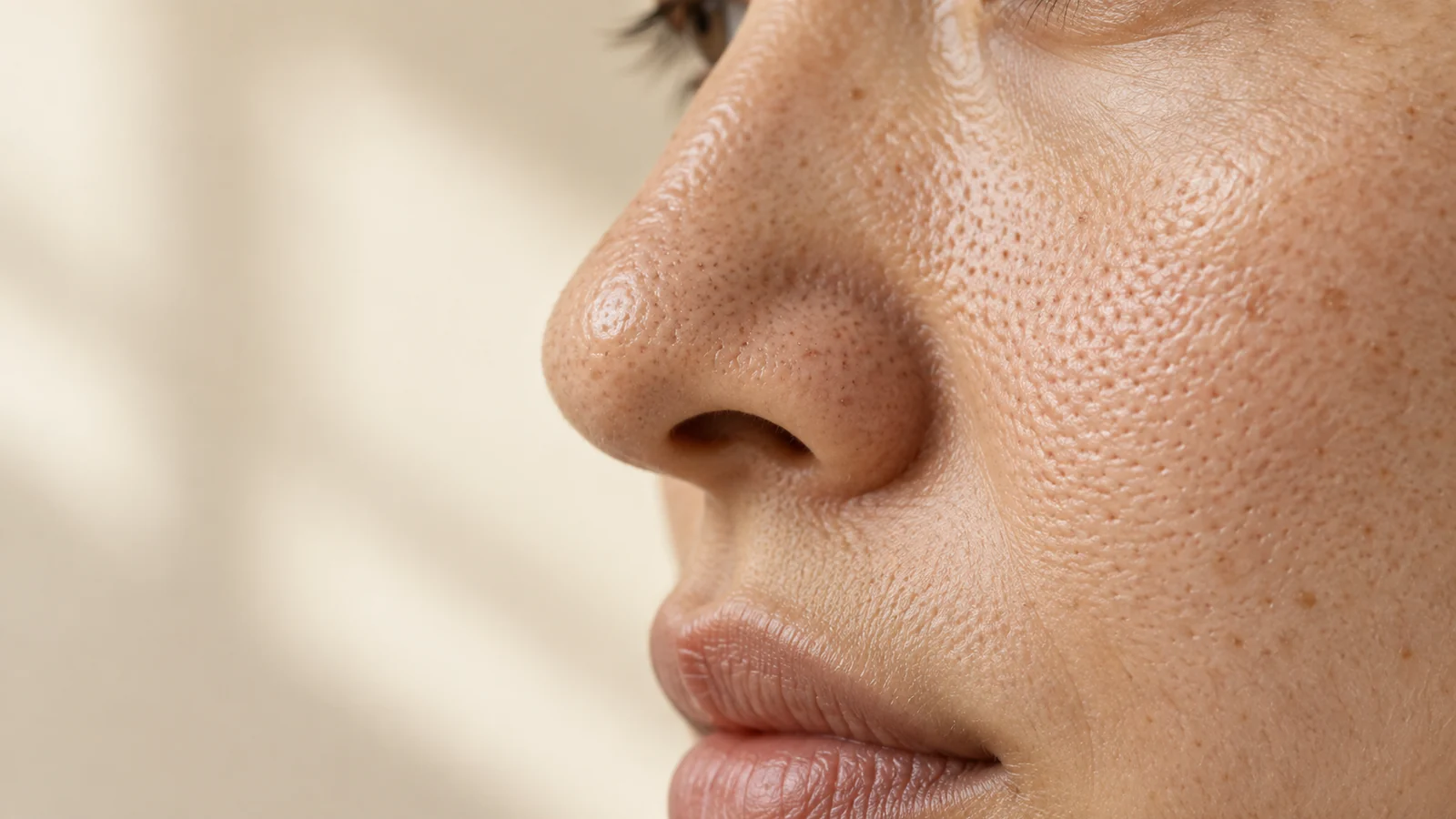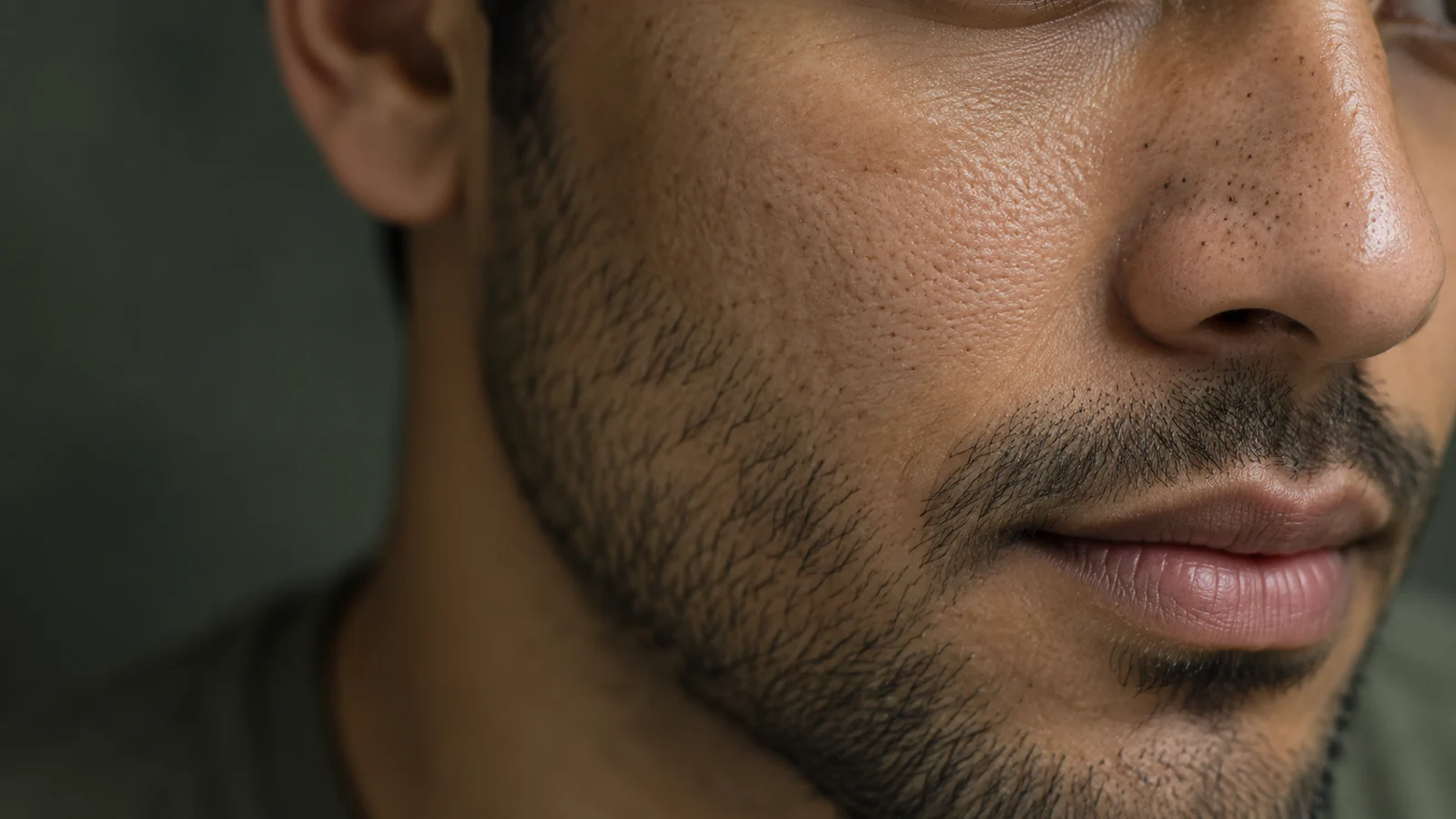
Acne is an inflammatory condition of the hair follicle and its oil gland, driven by oil, clogged pores, bacteria and inflammation. [1, 2] If you want to know how to get rid of pimples and acne, the answer is steady, evidence-based care, not a quick fix. Skincare has some support in mild acne, while severe or scarring acne belongs with a dermatologist. [3, 4]
In this article
What is acne?
Acne is a chronic inflammatory disease of the pilosebaceous unit, the hair follicle together with its oil gland. It is one of the most common skin conditions in the world, and despite a popular belief, it is not just a natural stage of life. It often leaves scars and lowers quality of life. [1]
It appears where oil glands are dense: the face, neck, chest and back. Family history may play an important role, and acne does not always end with the teenage years; it can continue into adulthood. [2]
What causes acne?
Reviews describe several overlapping processes rather than one cause. [1, 2]
- More sebum. Androgens, hormones present in everyone, drive oil production. Androgen-driven sebum is considered necessary for acne to develop. [5]
- Clogged follicles. Cells lining the follicle opening build up and form a plug, a process called follicular hyperkeratinization. [1]
- Bacteria. Cutibacterium acnes (formerly Propionibacterium acnes) colonizes the follicles, and sebum helps it multiply. [2, 5]
- Inflammation. Changes in both innate and acquired immunity are part of the picture. [1]
Differences in oil output across the face, along with sex and age, help explain where lesions show up. [5] Even so, what exactly sets acne off in a particular person is still unclear. [2]
What are the types of acne?
Acne has four basic lesion types: comedones, papules, pustules and nodules. Comedones are blackheads and whiteheads, plugs in the follicle that are not inflamed. The other three are inflamed, ranging from small red bumps to deep, painful lumps. Because spots come and go, lesion counts change over time. [6]
| Type | What you notice | Inflamed? |
|---|---|---|
| Blackhead (open comedone) | Small dark dot in the opening of a pore | No |
| Whitehead (closed comedone) | Small white or skin-colored bump | No |
| Papule | Small, red, tender bump | Yes |
| Pustule | Red bump with a white or yellow center | Yes |
| Nodule | Large, deep, painful lump | Yes |
Comedones get their own blackheads guide. You may also see the term “cystic acne.” Our sources do not define cysts separately from nodules; whatever the name, deep, painful lumps are a reason to see a dermatologist.
How is acne severity judged?
Dermatologists use global rating scales, lesion counts and photographs. Counting lesions gives more objective data. [6] There is still no agreement on exact grading criteria. [1] So “mild” and “moderate” are working labels, not fixed categories.
Why do pimples show up on your chin or forehead?
Where pimples appear partly follows oil production, and the pattern can shift with age. In a study of 878 people with acne in Korea, bacterial fluorescence on the cheeks tracked both sebum and lesion counts. On the forehead, nose and chin it tracked sebum levels, but not the number of lesions. [7]
The same study found that the older the patients were, and the later their acne had started, the more the pattern moved from the upper T-zone toward the lower face. It was a single cross-sectional study from one country and does not explain the cause. [7]
What about face mapping, the idea that chin spots point to hormones or gut trouble? We found no evidence linking face zones to particular organs, and the study above does not support it either. [7]
Timing around periods is a separate question. In a survey of 400 women aged 12 to 52, 177 (44%) said their acne got worse before their period. This was more common in women over 33 than in those aged 20 to 33. The answers were self-reported, with no lesion counts. [8] The menstrual cycle and skin guide covers this; the hormonal acne guide covers adult acne.
Does what you eat affect acne?
Diet seems to play a modest role, mainly through high glycemic foods. A systematic review of 34 studies found that a high glycemic index and a higher daily glycemic load were linked with acne and its severity, and randomized trials backed this up. The authors described the effect as “modest but significant.” [9]
One of those trials followed 43 young men aged 15 to 25 for 12 weeks. Total lesion counts fell more on a low glycemic load diet than on a carbohydrate-rich control diet (−23.5 ± 3.9 vs −12.0 ± 3.5). The diet group also lost more weight, and that effect could not be separated from the diet itself. [10]
Dairy is less clear. A meta-analysis of observational studies linked high intake of total milk (OR 1.48), low-fat milk and skim milk with having acne, while yogurt and cheese showed no significant link. [11] Observational data cannot show cause and effect, and results differ by population, sex and eating habits. [9]
In practice, if you suspect a food, change one thing at a time and watch your skin for several weeks rather than cutting out whole food groups.
How to get rid of pimples: what does the evidence support?
No single product clears acne, and the evidence gives no fixed timeline. What helps is consistent care matched to how severe your acne is. For mild acne, skincare has some support, alone or next to treatment. [3] Moderate, severe or scarring acne is best managed with a dermatologist, who may combine several approaches. [4]
The 2024 acne guideline, built with the GRADE method, gives strong recommendations to several medicines, including topical retinoids and antibiotics, that a clinician prescribes or supervises. It gives conditional recommendations to salicylic acid and azelaic acid. [4] Conditional means benefit is plausible but not certain for everyone.
Is washing more often the answer?
Probably not. A systematic review of 14 prospective studies with 671 participants looked at washing frequency, soaps, syndet bars and several cleanser types. Too few studies were well run to make reliable recommendations. [12] That means the evidence is thin, not that cleansing is pointless.
In practice, washing twice a day with a mild cleanser and lukewarm water is a sensible baseline. Harsh cleansing strains skin; the skin barrier guide explains why.
Barrier-friendly care can make treatment easier to stick with. In a double-blind trial of people on a prescription acne treatment, a ceramide cleanser and lotion kept water loss significantly lower than a basic cleanser; the abstract gives no participant count, and a whole routine was tested. [13] A consensus panel likewise found that dermocosmetics (skincare made for skin conditions) can help mild acne and treatment tolerability, on low to moderate quality evidence. [3]
Which over-the-counter ingredients have evidence?
Salicylic acid. Beyond the conditional guideline recommendation, a Cochrane review rated salicylic acid evidence as low or very low quality, and some studies reported peeling and redness. [14] In a multicenter study of 500 people with mild to moderate facial acne, a 2% supramolecular salicylic acid hydrogel was compared with a prescription topical retinoid. At 12 weeks, there was no statistically significant difference in marked improvement or side effects. [15] It was a special formula, and “no difference” does not prove equivalence. The salicylic acid guide covers how to start it.
Azelaic acid. A systematic review of 43 trials, 16 of them in acne, suggested topical azelaic acid outperformed a vehicle (an inactive base) for overall improvement and severity. [16] Those studies used 15–20%, which is medicine strength in most countries, so low-strength cosmetics cannot borrow the results.
Niacinamide. The same Cochrane review found four studies comparing nicotinamide (niacinamide) with antibiotic gels; evidence was low quality. [14] See the niacinamide guide.
Retinol. None of our sources tested cosmetic retinol directly on acne. The guideline’s strong recommendation applies to medicated topical retinoids, not to retinol serums. [4] The retinol guide explains how the two differ.
Tea tree oil has its own, separate evidence; see the tea tree oil guide.
Does acne get worse before it gets better?
Not necessarily. A review found no primary clinical data behind the common belief that topical retinoids make acne worse at first. Some worsening in the first one to two weeks may simply reflect acne’s natural ups and downs. [17] The review dates from 2009 and is not specific to cosmetic retinol.
In practice, if a new product brings stinging, a rash or clearly worse breakouts over several weeks, stop it and reassess rather than pushing through.
Do non-comedogenic products help?
“Non-comedogenic” means a product is made with the aim of not clogging pores. Some sebum lipids are comedogenic on their own, so the idea makes sense. [5] But we found no study that directly tested whether products with this label reduce acne.
In practice, if heavy creams seem to trigger breakouts, try a lighter texture. The guide to reading an ingredient list explains what labels can tell you.
Should you pop pimples?
It is better not to. We found no study that measures how much occasional squeezing adds to your scar risk, so there is no honest number to give. What is known: scarring risk rises with severity and delayed treatment, and compulsive picking can cause lasting damage. [18, 19]
Acne excoriée is a skin-picking disorder in which acne lesions are picked or squeezed compulsively. It belongs to the obsessive-compulsive and related disorders, usually starts in adolescence or early adulthood, and is more common in women. It is often missed, and diagnosing it early helps limit permanent skin damage. [19] If you pick and cannot stop, tell a doctor; it is a recognized condition, not a lack of willpower.
Scars are common. A meta-analysis of 37 studies and 24,649 people with acne found scars in 47%. Risk was higher in men (OR 1.58), with a family history of acne (OR 2.73) and with more severe acne (OR 2.34 for moderate, 5.51 for severe). [20] These are observational data. The acne scars guide explains how marks and scars differ.
In practice, keep nails short, cover a spot with a hydrocolloid patch if that helps you leave it alone, and let a clinician handle large, painful lesions.
When should you see a dermatologist?
See a dermatologist if your acne is severe, leaves scars, forms deep painful lumps, affects your mood, or has not improved after a few months of steady care. The 2024 guideline recommends prescription treatment for acne that is severe, scarring, psychologically burdensome or not responding to standard therapy. [4]
Timing matters. In a US study of 1,972 patients seen by 120 dermatologists over one week, 43% had acne scars. Scarring was linked with severity, recurring acne, male sex and the time between acne onset and the first effective treatment; that delay was the main factor that could be changed. [18]
Scarring is not limited to severe acne: 69% of those with scars had mild or moderate acne at the visit. The patients came from dermatology clinics, so the figures may not apply to everyone. [18]
Flat brown or red marks after spots are a separate concern. A review of 47 studies found retinoids, hydroxy acids and niacinamide among the topical agents with high-quality studies, and nearly every study recommended SPF 30 or higher. [21] The dark spots guide covers pigment in more depth.
For the clinical evidence and its limits, see the azelaic acid guide.
Frequently asked questions
How long does acne last?
Our sources give no average duration. Acne is a chronic condition that often begins in the teenage years and can continue into adulthood. [2] Recurring acne is one of the recognized risk factors for scarring. [18] If acne persists despite months of steady care, a dermatologist can reassess the plan.
Can adults get acne?
Yes. Acne can carry on into adulthood rather than stopping after adolescence. [2] In a survey of 400 women, premenstrual flares were reported more often by those over 33. [8] New adult acne with irregular periods is worth discussing with a doctor.
Is acne caused by dirty skin?
No. Reviews describe acne as developing inside the follicle through sebum, blocked openings, bacteria and inflammation; surface dirt is not among those mechanisms. [1] Research on washing is thin, and scrubbing harder has no evidence behind it. [12] In practice, gentle cleansing twice a day is a sensible routine.
Are dark marks after pimples scars?
Not always. A flat brown or red mark is a color change, while a pitted or raised scar is a change in the skin’s texture. Texture changes usually need professional assessment. The acne scars guide explains how to tell them apart.
References
- Moradi Tuchayi S, Makrantonaki E, Ganceviciene R, Dessinioti C, Feldman SR, Zouboulis CC. Acne vulgaris. Nat Rev Dis Primers. 2015;1:15029. PubMed · DOI
- Williams HC, Dellavalle RP, Garner S. Acne vulgaris. Lancet. 2012;379(9813):361-372. PubMed · DOI
- Thiboutot D, Layton AM, Traore I, et al. International expert consensus recommendations for the use of dermocosmetics in acne. J Eur Acad Dermatol Venereol. 2025;39(5):952-966. PubMed · DOI
- Reynolds RV, Yeung H, Cheng CE, et al. Guidelines of care for the management of acne vulgaris. J Am Acad Dermatol. 2024;90(5):1006.e1-1006.e30. PubMed · DOI
- Del Rosso JQ, Kircik L. The primary role of sebum in the pathophysiology of acne vulgaris and its therapeutic relevance in acne management. J Dermatolog Treat. 2024;35(1):2296855. PubMed · DOI
- Witkowski JA, Parish LC. The assessment of acne: an evaluation of grading and lesion counting in the measurement of acne. Clin Dermatol. 2004;22(5):394-397. PubMed · DOI
- Choi CW, Choi JW, Park KC, Youn SW. Ultraviolet-induced red fluorescence of patients with acne reflects regional casual sebum level and acne lesion distribution: qualitative and quantitative analyses of facial fluorescence. Br J Dermatol. 2012;166(1):59-66. PubMed · DOI
- Stoll S, Shalita AR, Webster GF, Kaplan R, Danesh S, Penstein A. The effect of the menstrual cycle on acne. J Am Acad Dermatol. 2001;45(6):957-960. PubMed · DOI
- Meixiong J, Ricco C, Vasavda C, Ho BK. Diet and acne: A systematic review. JAAD Int. 2022;7:95-112. PubMed · DOI
- Smith RN, Mann NJ, Braue A, Mäkeläinen H, Varigos GA. A low-glycemic-load diet improves symptoms in acne vulgaris patients: a randomized controlled trial. Am J Clin Nutr. 2007;86(1):107-115. PubMed · DOI
- Aghasi M, Golzarand M, Shab-Bidar S, Aminianfar A, Omidian M, Taheri F. Dairy intake and acne development: A meta-analysis of observational studies. Clin Nutr. 2019;38(3):1067-1075. PubMed · DOI
- Stringer T, Nagler A, Orlow SJ, Oza VS. Clinical evidence for washing and cleansers in acne vulgaris: a systematic review. J Dermatolog Treat. 2018;29(7):688-693. PubMed · DOI
- Draelos ZD, Baalbaki N, Colon G, Dreno B. Ceramide-Containing Adjunctive Skin Care for Skin Barrier Restoration During Acne Vulgaris Treatment. J Drugs Dermatol. 2023;22(6):554-558. PubMed · DOI
- Liu H, Yu H, Xia J, et al. Topical azelaic acid, salicylic acid, nicotinamide, sulphur, zinc and fruit acid (alpha-hydroxy acid) for acne. Cochrane Database Syst Rev. 2020;5(5):CD011368. PubMed · DOI
- Ye CX, Yi J, Su Z, et al. 2% supramolecular salicylic acid hydrogel vs. adapaline gel in mild to moderate acne vulgaris treatment: A multicenter, randomized, evaluator-blind, parallel-controlled trial. J Cosmet Dermatol. 2024;23(6):2125-2134. PubMed · DOI
- King S, Campbell J, Rowe R, Daly ML, Moncrieff G, Maybury C. A systematic review to evaluate the efficacy of azelaic acid in the management of acne, rosacea, melasma and skin aging. J Cosmet Dermatol. 2023;22(10):2650-2662. PubMed · DOI
- Yentzer BA, McClain RW, Feldman SR. Do topical retinoids cause acne to “flare”? J Drugs Dermatol. 2009;8(9):799-801. PubMed
- Tan J, Kang S, Leyden J. Prevalence and Risk Factors of Acne Scarring Among Patients Consulting Dermatologists in the USA. J Drugs Dermatol. 2017;16(2):97-102. PubMed
- Johnsen N, Poppens M, Cheng K. Acne excoriée: Diagnostic overview and management. Int J Dermatol. 2024;63(5):565-571. PubMed · DOI
- Liu L, Xue Y, Chen Y, et al. Prevalence and risk factors of acne scars in patients with acne vulgaris. Skin Res Technol. 2023;29(6):e13386. PubMed · DOI
- Tan MG, Kim WB, Jo CE, Nabieva K, Kirshen C, Ortiz AE. Topical treatment for postinflammatory hyperpigmentation: a systematic review. J Dermatolog Treat. 2022;33(5):2518-2526. PubMed · DOI