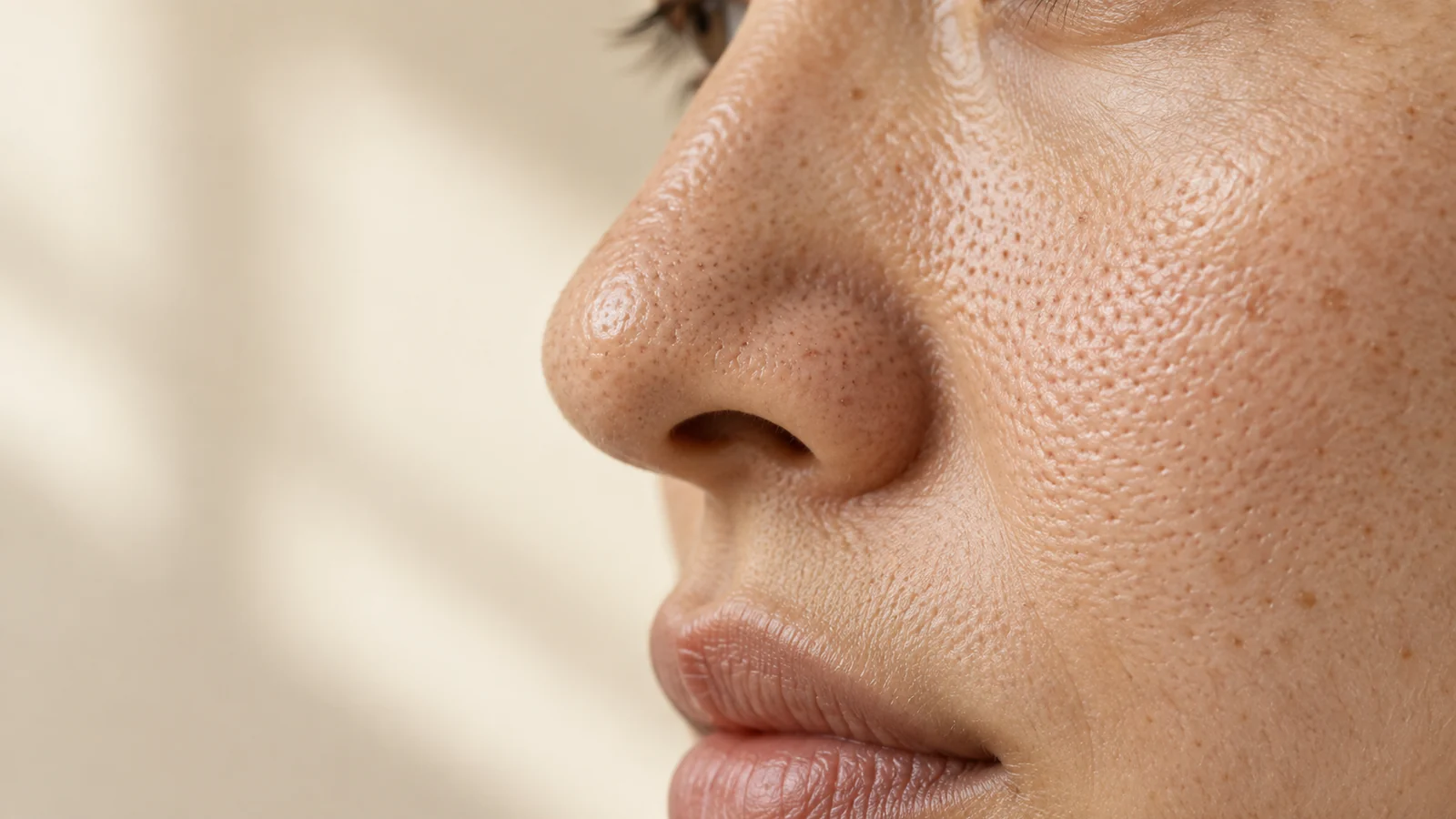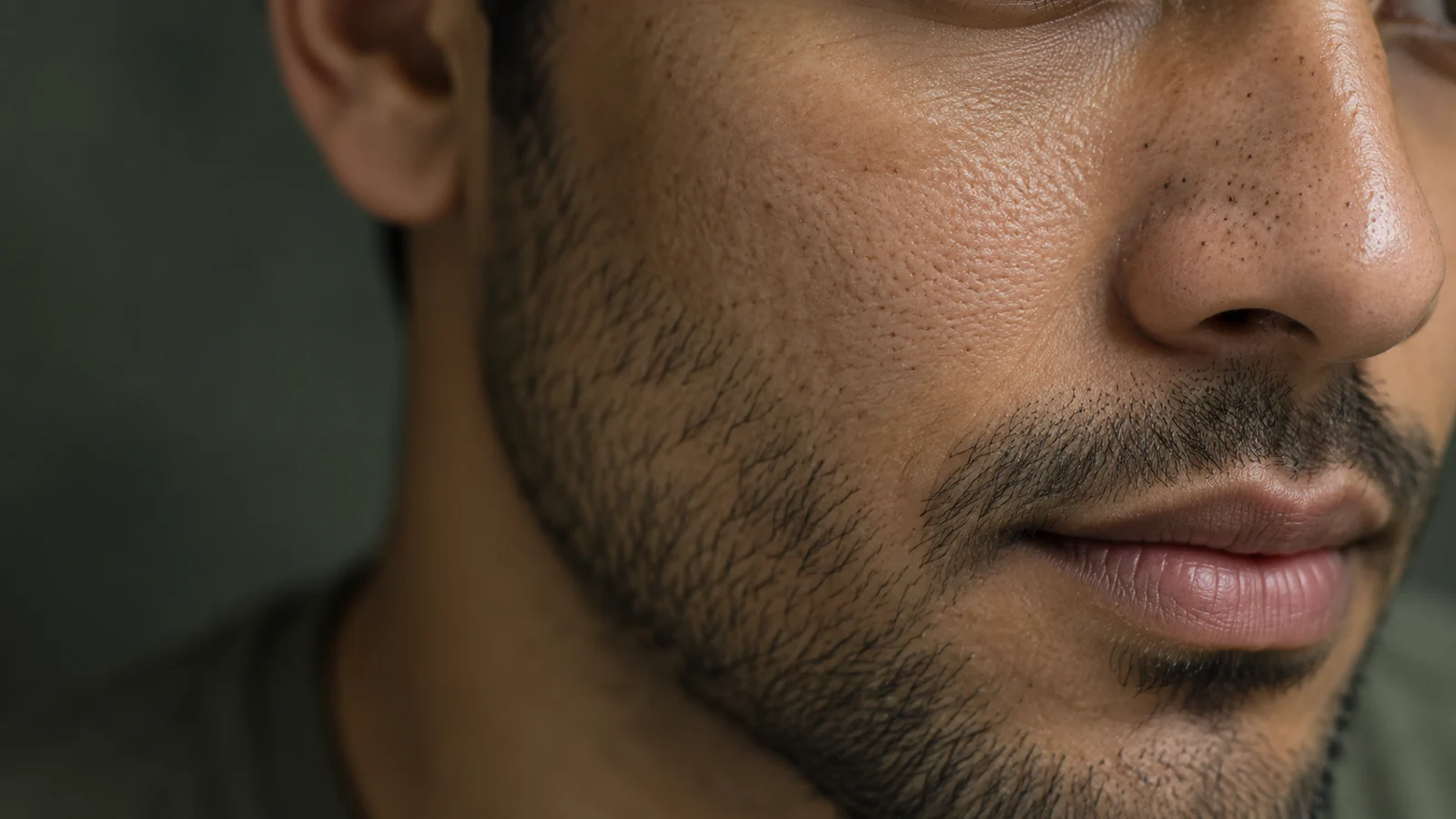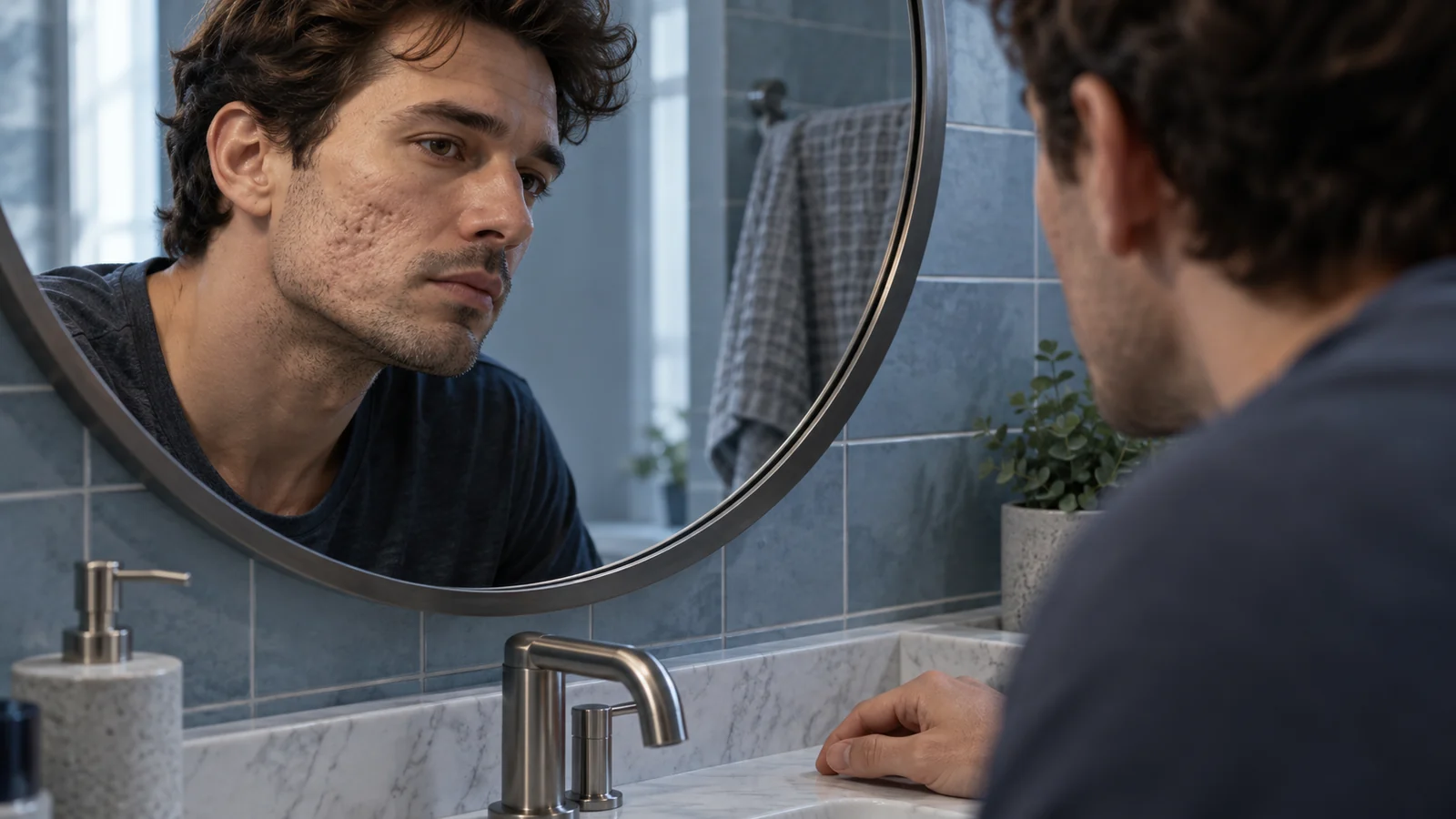
Blackheads are open comedones: plugs formed by a buildup of cells inside the follicle, not by dirt. [1, 2] If you are looking for how to get rid of blackheads, scrubbing harder is not the answer. The evidence for salicylic acid is limited, clinic extraction works only temporarily, and some “blackheads” on the nose are normal sebaceous filaments. [3, 4, 5]
In this article
- What are blackheads?
- Why are blackheads black?
- Blackheads on your face: are they really blackheads?
- How to get rid of blackheads: what does the evidence show?
- Should you squeeze blackheads?
- Do pore strips work?
- How to prevent blackheads
- When should you see a dermatologist?
- Frequently asked questions
- References
What are blackheads?
Blackheads are open comedones, small plugs that form in the duct of a hair follicle and its oil gland. They start when cells lining the duct build up too quickly, a process called hyperkeratinization. Under a microscope this first appears as a microcomedone; on the skin it shows up as a blackhead, a whitehead or a larger macrocomedone. [1]
Microcomedones are invisible to the eye and form the first stage of the comedone cycle. From there, they can become non-inflamed comedones or inflamed spots. [6] That is why blackheads sit inside the bigger picture of acne; the acne guide explains the rest of that process.
Researchers have linked the number and size of microcomedones with acne severity, measured with a surface biopsy that lifts follicle plugs on a strip of cyanoacrylate glue. [1] In other words, the visible dots are only part of what is going on under the surface.
How are blackheads different from whiteheads?
Both are forms of the same process. [1] A blackhead is open at the surface, so the plug is visible as a dark dot. A whitehead, or closed comedone, stays covered by a thin layer of skin and looks like a small pale bump. A firm, pearly white bump may instead be a milium, a tiny keratin cyst; our milia guide explains the difference.
Our sources describe this open and closed difference only at the level of a review. They do not compare, for example, how often each type turns into an inflamed pimple, so any claim that one type is “worse” goes beyond the evidence.
Why are blackheads black?
The dark color is not dirt, but its exact cause is still debated. In an electron microscopy study of expressed black open comedones, researchers found no melanosomes (the packets that carry skin pigment). They concluded that if the plugs contain melanin at all, the amount is too small to explain the color. [2]
That study was small and dates from 1983. Some older studies from the 1970s did report melanin in comedones, so the question is not closed. [2]
You will often read that blackheads turn black because the plug oxidizes in the air. That explanation is widespread, but we did not find a study that tested it directly, so we do not present it as fact here.
What matters in practice: because the dark color is not surface grime, washing more often or scrubbing harder will not lift it out. The plug sits inside the pore, which is why approaches that act on the follicle make more sense than friction on the surface.
Blackheads on your face: are they really blackheads?
Many of the grayish dots on the nose are sebaceous filaments, not blackheads. These are whitish-yellow, cylinder-shaped structures that can be squeezed out of oil-rich areas of the face. They are most common in the middle of the face and on the sides of the nose, after puberty, in people with oily skin and large pores. [5]
A filament is made of 10 to 30 layers of horny cells, bacteria, sebum, cell debris and a hair. After it is squeezed out, the follicle fills again within 30 days. The researchers who described it considered it a common, normal variant of the oil gland follicle, and different from a microcomedone. [5]
That description comes from a microscopy study published in 1976, not a clinical trial. Still, it explains a common frustration: you squeeze the nose, the dots disappear, and a few weeks later they are back.
| Feature | Blackhead | Sebaceous filament |
|---|---|---|
| What it is | Plug from excess cell buildup | Normal follicle contents |
| Look | Distinct dark dot | Small gray or yellowish dots in a pattern |
| Where | Face, nose, chest, back | Mostly nose and central face |
| After squeezing | Can come back | Refills within about a month |
The table is a practical guide, not a diagnosis. If your pores look large overall, the large pores guide covers what affects their size.
How to get rid of blackheads: what does the evidence show?
There is no quick way to clear blackheads for good. The most studied options work on the follicle rather than the surface: salicylic acid has limited, mostly small studies; topical retinoids have stronger support but are medicines; and clinic extraction reduces comedones only temporarily. [7, 3, 4] In practice, consistency matters more than intensity.
Salicylic acid
Salicylic acid helps the outer layer of skin shed by loosening the connections between cells, and it acts on comedones. Those properties explain its use in chemical peels, but results from strong clinic peels do not transfer to everyday serums. [8]
For acne, the 2024 guideline gives salicylic acid a conditional recommendation. [7] A Cochrane review judged the evidence for it low or very low quality. [3] Studies on blackheads specifically are small:
- In a four-week crossover study of 30 people with acne, comedones fell significantly only while people were using a 2% salicylic acid cleanser, not with a benzoyl peroxide wash. The study was old, tiny and short, and randomization was not described. [9]
- In an eight-week trial of 83 adults, a serum with salicylic acid and a related hydroxy acid improved open comedones on the nose, closed comedones, pore density and oiliness; adding a mask reduced closed comedones slightly more (−6.56 ± 0.39 vs −5.19 ± 0.44). There was no placebo group, and the formula had several ingredients. [10]
In practice, a leave-on or wash-off product used a few times a week, then more often if your skin tolerates it, is a common approach. The salicylic acid guide covers strength, frequency and irritation.
Retinoids
Topical retinoids are a core acne treatment, and the 2024 guideline gives them a strong recommendation. [7] In one small maintenance trial, 49 people used a prescription retinoid daily, every other day, or an inactive vehicle for 12 weeks. By week 20, microcomedones had fallen more in the retinoid groups (−53.5 and −50.6) than with the vehicle (−42.1). [11]
That trial used a prescription medicine, was small and single-center, and may have had industry support. It does not show what cosmetic retinol does to blackheads, and we found no study that tested that directly. [11] A dermatologist can decide whether a prescription retinoid fits you; the retinol guide explains how over-the-counter retinol differs.
Professional extraction
Dermatologists often remove comedones with a metal extractor. In a split-face trial of people with many comedones, four extractor sessions two weeks apart reduced comedones by an average of 46.36%, compared with 64.49% on the side treated with a laser. [4]
The authors noted that extraction works only temporarily and can irritate the skin. The trial was single-center and had no untreated comparison side. [4] It was also done by clinicians in a clinic, so it tells you nothing about squeezing at home.
Should you squeeze blackheads?
It is better not to squeeze hard or often. Picking at lesions is one of four factors in a tool that estimates the risk of pitted acne scars, alongside acne severity, how long acne lasts and a family history of scarring. The tool was right about two in three people, with 82% sensitivity and 43% specificity. [12]
That tool concerns acne scars in general, not blackheads specifically, and it did not prove that picking causes scars. [12] We also found no study that directly measured infection or inflammation after squeezing blackheads at home.
Even clinic extraction, done with proper tools, gives only temporary results and can irritate skin. [4] In practice, squeezing with fingernails puts pressure on the surrounding skin, and a blackhead that refills after a few weeks is rarely worth the redness. If you do decide to press one out, do it gently, on clean skin, and stop if it does not come out easily. The acne scars guide explains which marks fade and which stay.
Do pore strips work?
Nobody can say for certain, because we found no controlled study with a readable abstract that tested pore strips, peel-off masks or vacuum pore cleaners. These products may pull out the top of some plugs, but there is no independent evidence showing how much they remove, how long the effect lasts or how often they irritate skin.
In practice, their effect looks temporary, since plugs and filaments refill over time. Strong adhesives and suction can leave skin red or sore, especially if you already use exfoliating acids or retinoids. If you use them, keep it occasional and avoid broken or irritated skin. The skin barrier guide explains why stacking harsh steps can backfire.
How to prevent blackheads
Blackheads cannot be prevented with certainty, and no study has tested prevention directly. One review suggests that targeting microcomedones, the invisible first stage, may partly help reduce lesions and relapses. That is the authors’ view rather than proof, but it supports steady routines over bursts of intense care. [6]
A practical routine for prevention might include:
- A mild cleanser once or twice a day, without scrubbing.
- One exfoliating active, such as salicylic acid, used consistently rather than aggressively.
- A moisturizer and sunscreen that feel light on your skin.
- Patience: judge changes over several weeks, not days.
Does “non-comedogenic” mean anything?
It means less than many people think. The idea of comedogenicity began with animal tests on raw ingredients, on the assumption that finished products containing them would clog pores too. Lists of ingredients to avoid grew from there. [13]
A 1982 study found that the rabbit ear test is more sensitive than human skin, and that ingredients only weakly comedogenic in rabbits are probably fine for people who are not acne-prone. [14] A later study applied finished products to the backs of six people prone to comedones for four weeks. Products with supposedly comedogenic ingredients were not necessarily comedogenic. [13]
Both studies were small and old, and used covered application on back skin, which differs from everyday use on the face. [14, 13] So treat comedogenicity scores as rough hints, not rules. The guide to reading an ingredient list explains what an ingredient list can tell you.
When should you see a dermatologist?
See a dermatologist if blackheads are widespread, keep coming back despite months of consistent care, sit alongside inflamed or painful spots, or leave marks. A dermatologist can check whether you are dealing with comedonal acne, sebaceous filaments or something else, and can consider prescription options or in-clinic extraction.
It is also worth getting advice if you find it hard to stop squeezing, if your skin is sore from strips or scrubs, or if you have large, deep blackheads that do not budge. Bring a list of the products you use and how often.
Which question does the evidence answer? Acne studies do not necessarily measure blackhead counts separately. The review rated evidence for salicylic acid as low or very low quality; it cannot establish a particular blackhead product as the most effective option. [3]
Frequently asked questions
Do blackheads go away on their own?
Some may loosen over time, but our sources do not report how long a blackhead lasts without treatment. What is known is that sebaceous filaments, which are often mistaken for blackheads, refill within about 30 days after being squeezed out. [5] That is why many “blackheads” on the nose seem to return no matter what you do.
Can blackheads turn into pimples?
They can be part of the same process. Microcomedones, the invisible first stage, can develop into non-inflamed comedones or into inflamed lesions. [6] Our sources do not say how often a visible blackhead becomes an inflamed pimple. If blackheads regularly come with red, sore spots, the acne guide is the better starting point.
Are blackheads a sign of poor hygiene?
No. Blackheads begin with excess cell buildup inside the follicle duct. [1] An electron microscopy study found that their dark color does not come from melanin, and nothing suggests it comes from dirt either, though the exact cause is debated. [2] In practice, washing more often will not stop blackheads and may irritate your skin.
Does scrubbing help blackheads?
We found no study showing that physical scrubs clear blackheads. Because the plug sits inside the pore, friction on the surface is unlikely to reach it, and frequent scrubbing can leave skin irritated. In practice, a chemical exfoliant used consistently is a gentler option to try, and it is best not to combine it with harsh scrubs.
References
- Cunliffe WJ, Holland DB, Jeremy A. Comedone formation: etiology, clinical presentation, and treatment. Clin Dermatol. 2004;22(5):367-374. PubMed · DOI
- Zelickson AS, Mottaz JH. Pigmentation of open comedones. An ultrastructural study. Arch Dermatol. 1983;119(7):567-569. PubMed
- Liu H, Yu H, Xia J, et al. Topical azelaic acid, salicylic acid, nicotinamide, sulphur, zinc and fruit acid (alpha-hydroxy acid) for acne. Cochrane Database Syst Rev. 2020;5(5):CD011368. PubMed · DOI
- Yang MY, Qiao SM, Ning DC, Ding YH, Zeng WH, Wang Z. Treatment effect of ultra-pulse dynamic CO2 laser and comedone extractor in dense comedones: a prospective, randomized, split-face, evaluator-blind, controlled clinical trial. Lasers Med Sci. 2024;39(1):233. PubMed · DOI
- Plewig G, Wolff HH. [Sebaceous filaments (author’s transl)]. Arch Dermatol Res (1975). 1976;255(1):9-21. PubMed · DOI
- Xie L, Hamblin MR, Zheng D, Wen X. The role of microcomedones in acne: Moving from a description to treatment target? J Dtsch Dermatol Ges. 2024;22(1):9-16. PubMed · DOI
- Reynolds RV, Yeung H, Cheng CE, et al. Guidelines of care for the management of acne vulgaris. J Am Acad Dermatol. 2024;90(5):1006.e1-1006.e30. PubMed · DOI
- Arif T. Salicylic acid as a peeling agent: a comprehensive review. Clin Cosmet Investig Dermatol. 2015;8:455-461. PubMed · DOI
- Shalita AR. Comparison of a salicylic acid cleanser and a benzoyl peroxide wash in the treatment of acne vulgaris. Clin Ther. 1989;11(2):264-267. PubMed
- Li S, He X, Zhang Z, et al. Efficacy and safety of a facial serum and a mask containing salicylic acid and lipohydroxy acid in acne management: A randomized controlled trial. J Cosmet Dermatol. 2023;22(9):2502-2511. PubMed · DOI
- Thielitz A, Sidou F, Gollnick H. Control of microcomedone formation throughout a maintenance treatment with adapalene gel, 0.1%. J Eur Acad Dermatol Venereol. 2007;21(6):747-753. PubMed · DOI
- Tan J, Thiboutot D, Gollnick H, et al. Development of an atrophic acne scar risk assessment tool. J Eur Acad Dermatol Venereol. 2017;31(9):1547-1554. PubMed · DOI
- Draelos ZD, DiNardo JC. A re-evaluation of the comedogenicity concept. J Am Acad Dermatol. 2006;54(3):507-512. PubMed · DOI
- Mills OH, Kligman AM. A human model for assessing comedogenic substances. Arch Dermatol. 1982;118(11):903-905. PubMed