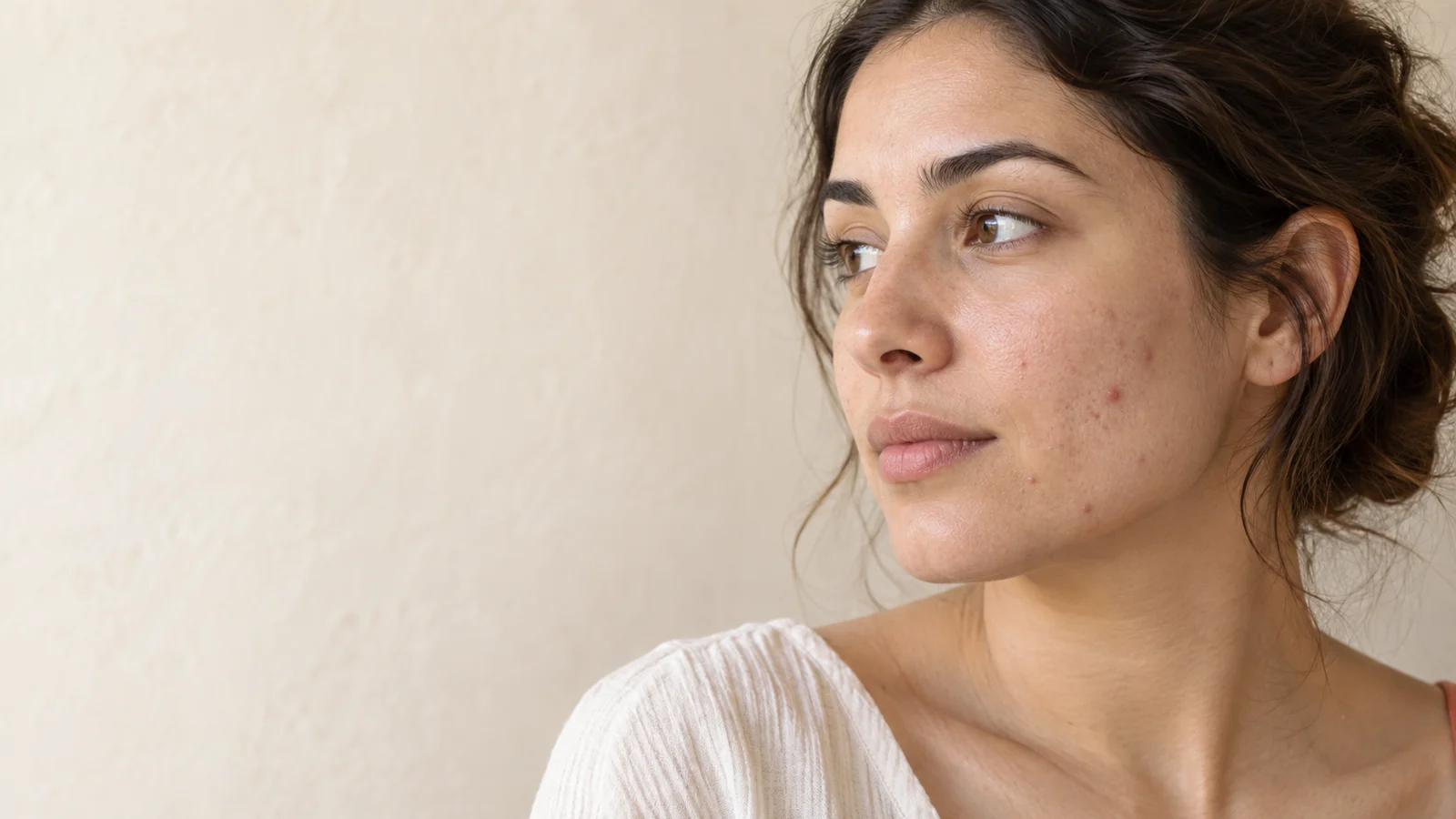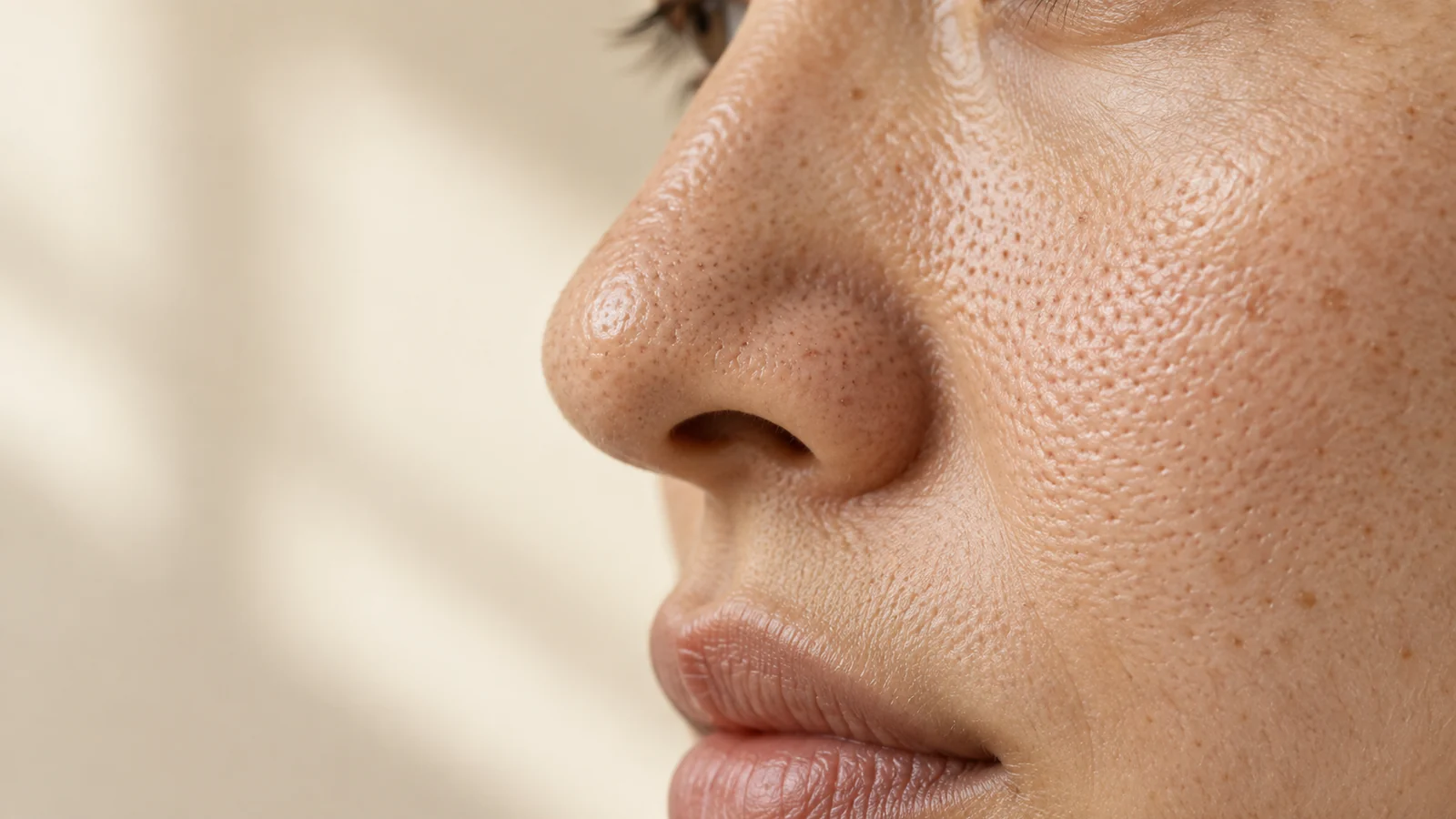
Large pores are the visible openings of hair follicles and their oil glands. They are a cosmetic concern, not a disease. [1, 2] Oil production, loss of elasticity, age and sex all play a part. [3, 4] Skincare cannot close pores, but retinoid studies suggest their look can improve somewhat over months; that evidence is limited. [5, 6]
In this article
What are pores?
Pores are the widened openings of pilosebaceous follicles, the hair follicle and its oil gland. Everyone has them, and how visible they are depends on age, sex, genetics, sun exposure, ethnicity and oil production. [2] Large pores show up as visible changes in the texture of the skin’s surface.
For many people they are a cosmetic worry, not a medical problem. There is still no clear definition of when a pore counts as “enlarged,” and its causes are not fully understood. [1] So there is no normal size you should aim for; what matters is whether they bother you.
Why do pores on your face look bigger on the nose?
Pores on the face are not all alike. In an analysis of 434 facial images, enlarged pores were more prominent on the nose and forehead than on the cheeks. [7] These are also areas rich in oil glands, which fits with the link between oil and pore size described below.
Many of the dots you see on the nose are sebaceous filaments rather than clogged pores. The blackheads guide explains the difference and why squeezing them rarely helps for long.
What causes enlarged pores?
A review names three main causes of enlarged facial pores: high oil (sebum) production, reduced elasticity around the pore and a larger hair follicle. Recurring acne, sex hormones and even your skincare routine may also play a role. Because causes differ between people, the authors recommend an approach that fits the individual. [1]
Most studies on causes are small, cross-sectional and done in Korea or other Asian populations, so they show links rather than proof of cause.
Oil production
Oil shows the most consistent link with pore size. In a study of 30 men and 30 women, larger pores were significantly linked with higher sebum levels, male sex and age; sebum had the strongest link. The correlation between sebum and pore size was higher in men than in women (r = 0.47 vs r = 0.38). [3]
A second study of 60 people found the same pattern: more sebum went with more pores. [4] Both studies were small and cannot show that oil causes pores to enlarge, only that the two tend to go together. [3, 4]
Age and loss of elasticity
As skin loses elasticity, pores can look larger. In the same 60-person study, a measure of skin elasticity was negatively linked with pore count: less elasticity, more visible pores. Age itself showed no clear link in that study. [4]
Other studies found age effects. In the 434-image analysis, the number of enlarged pores rose with age, significantly between people in their 30s and 40s, and was linked with wrinkle severity. [7] In 116 Korean women aged 20 to 60, pore area grew until the 40s and then fell in the 50s and 60s, while pores became steadily more elongated, shifting from round to oval. [8]
So the findings on age are mixed: pores may not simply grow bigger, but they can change shape as skin sags. All of these studies were cross-sectional and mostly in Korean participants. [8]
Sex, hormones and acne
Men had larger or more pores in two studies. [3, 4] In the image analysis, however, pore counts did not differ by sex. [7] One small study also found that women’s pores were significantly larger around ovulation (P = 0.008). [3]
Acne is linked with pores, but not in a simple way. Having acne was associated with a higher pore count, yet acne severity was not linked with pore size or count in either study. [4, 3] A review lists recurring chronic acne as a possible contributor. [1] The acne guide covers acne itself.
Genetics, ethnicity and sun
Reviews list genetics and long-term UV exposure among the factors behind larger pores, but we found no study that measured their effect directly. [2] Ethnic differences have been measured in one small study. In 80 women aged 30 to 39 living in the US, Asian participants had the smallest pore area, and structural changes around the pore were most marked in African American participants. [9] The researchers worked for a cosmetics company, and the study included only one age group of women.
Can you shrink pores?
Not in the sense of closing them for good. Pores are the openings of follicles, and what changes their look is the oil, elasticity and follicle size around them. [1] Some treatments can make pores look smaller for a while, and clinic studies with repeated sessions have improved pore area and count. [2]
That difference matters when you read product claims. “Pore minimizing” or “pore tightening” on a label usually describes an appearance change, such as a mattifying or light-reflecting effect, rather than a lasting change in the pore itself.
In practice, the realistic goal is less shine and a smoother look, reached gradually. Making skin less oily and protecting it from sun damage are the two areas where the evidence, though indirect, makes the most sense.
How to reduce pores: what does skincare do?
Skincare can influence how noticeable pores are, but the evidence is indirect. Pore appearance has mostly been measured as a secondary outcome in sun damage studies of retinoids, not as the main goal. Niacinamide can lower oil in some studies, and salicylic acid acts on clogged pores, but neither has been shown to shrink pores on its own.
Do retinoids help large pores?
Retinoids have the most data, but pores were never the main focus. In a 24-week study of 125 people with sun-damaged skin, 62 used a prescription retinoid cream nightly and 63 an inactive cream. Physicians saw improvement in wrinkles, discoloration and roughness, and users reported improvement in pores. Skin replicas, however, showed no significant change in surface texture. [5]
In a three-month study of 120 women with sun-damaged skin, an evening cream with 0.2% retinol and another active improved pores, with no statistical difference from a prescription retinoid and better tolerance. [6] There was no placebo group, everyone also used SPF 50 in the morning, and the study was industry-funded. [6]
A 16-week study in women aged 47 to 66 found that a cosmetic formula with a retinol ester, hexylresorcinol and niacinamide improved pores as much as a prescription retinoid, with less irritation. [10] Because it combined three ingredients, the effect of any one cannot be separated. The retinol guide covers how to introduce retinol without irritation.
Does niacinamide shrink pores?
We found no controlled study that measured pore size after niacinamide alone. What exists is data on oil. In a 100-person placebo-controlled study in Japan, a moisturizer with 2% niacinamide lowered the rate of sebum production after two and four weeks. [11]
In a 30-person half-face study in the US, surface oil fell after six weeks, but the rate of sebum production did not change significantly. [11] So results differed between the two groups, and less oil does not automatically mean smaller pores. The niacinamide guide covers its other uses.
Does salicylic acid unclog or shrink pores?
Salicylic acid helps the outer skin layer shed and acts on comedones, which is why it is used in peels. [12] For acne, the 2024 guideline gives it a conditional recommendation. [13] But we found no controlled study showing that everyday salicylic acid products shrink pores.
In practice, it may make pores look cleaner by clearing plugs, which can help if yours look dark or congested. The salicylic acid guide covers strength and frequency.
Does sunscreen protect pores?
Possibly, but only indirectly. In a trial of 903 adults under 55, people who used broad-spectrum sunscreen daily showed no detectable increase in skin aging after 4.5 years, and 24% less aging than people who used it when they chose. [14] Pores were not measured separately.
In a study of 67 pairs of identical twins, those who smoked or did not protect their skin had worse texture and wrinkle scores, but again no separate finding for pores. [15] Since loss of elasticity is linked with visible pores, protecting skin from sun damage is a reasonable, though unproven, way to protect how pores look over time. The sunscreen guide covers everyday use.
Do pores open and close with hot and cold water?
We found no study that tested whether hot water opens pores or cold water closes them; a PubMed search on 21 September 2026 turned up nothing relevant. So the popular advice to steam pores open and splash them shut with cold water has no evidence behind it either way.
In practice, very hot water can leave skin dry or irritated, and the skin barrier guide explains why. Lukewarm water is a comfortable default. A cold splash can feel refreshing, but there is no evidence that it changes your pores.
What about professional treatments?
A review of 19 clinical studies with 591 people, 83.7% of them women aged 18 to 80, found that multiple sessions and combined approaches improved pore area and count. Mild, reversible burning and redness were common. The authors suggest focusing on oil control in younger people and adding skin renewal in older people. [2]
The studies were small and mostly used devices and lasers, and the review did not grade the quality of the evidence. [2] If you are considering a procedure, a dermatologist can assess your skin and discuss what a realistic change looks like.
When should you see a dermatologist?
Large pores are not a medical problem, so there is no need to see a doctor for them alone. See a dermatologist if you also have ongoing acne, inflamed or painful spots, sudden changes in skin texture, or irritation from products you are using to shrink pores. A dermatologist can also tell you whether a procedure is worth considering.
It is also worth asking for advice if oily skin comes with other changes, such as new acne in adulthood or irregular periods.
Frequently asked questions
Do pores get bigger with age?
Partly. In one image study, the number of enlarged pores rose with age, especially between the 30s and 40s. [7] In Korean women, pore area peaked in the 40s and then fell, but pores became more elongated with age. [8] Another study found no age link at all, but did link lower elasticity with more pores. [4]
Are large pores a sign of acne?
Not necessarily. Having acne was linked with a higher pore count in one study, but acne severity was not linked with pore size or count in two studies. [4, 3] If you have both, treating acne first is sensible; the acne guide explains how.
Why do my pores look bigger at certain times of the month?
It may be hormonal. In a small study of 60 people, women’s pores were significantly larger around ovulation. [3] That was a single study, so it is not a rule for everyone. The menstrual cycle and skin guide looks at other skin changes across the month.
Do pore strips make pores smaller?
We found no controlled study showing that pore strips make pores smaller. They may lift the top of some plugs, but the pore itself stays the same size, and plugs tend to return. In practice, frequent use can irritate skin, especially if you also use exfoliating acids or retinoids.
References
- Lee SJ, Seok J, Jeong SY, Park KY, Li K, Seo SJ. Facial Pores: Definition, Causes, and Treatment Options. Dermatol Surg. 2016;42(3):277-285. PubMed · DOI
- Parvar SY, Amani M, Shafiei M, Rastaghi F, Hosseini SA, Ahramiyanpour N. “The efficacy and adverse effects of treatment options for facial pores: A review article”. J Cosmet Dermatol. 2023;22(3):763-775. PubMed · DOI
- Roh M, Han M, Kim D, Chung K. Sebum output as a factor contributing to the size of facial pores. Br J Dermatol. 2006;155(5):890-894. PubMed · DOI
- Kim BY, Choi JW, Park KC, Youn SW. Sebum, acne, skin elasticity, and gender difference - which is the major influencing factor for facial pores? Skin Res Technol. 2013;19(1):e45-53. PubMed · DOI
- Lowe PM, Woods J, Lewis A, Davies A, Cooper AJ. Topical tretinoin improves the appearance of photo damaged skin. Australas J Dermatol. 1994;35(1):1-9. PubMed · DOI
- Bouloc A, Vergnanini AL, Issa MC. A double-blind randomized study comparing the association of Retinol and LR2412 with tretinoin 0.025% in photoaged skin. J Cosmet Dermatol. 2015;14(1):40-46. PubMed · DOI
- Jung HJ, Ahn JY, Lee JI, et al. Analysis of the number of enlarged pores according to site, age, and sex. Skin Res Technol. 2018;24(3):367-370. PubMed · DOI
- Jang SI, Kim EJ, Lee HK. A method of evaluating facial pores using optical 2D images and analysis of age-dependent changes in facial pores in Koreans. Skin Res Technol. 2018;24(2):304-308. PubMed · DOI
- Sugiyama-Nakagiri Y, Sugata K, Hachiya A, Osanai O, Ohuchi A, Kitahara T. Ethnic differences in the structural properties of facial skin. J Dermatol Sci. 2009;53(2):135-139. PubMed · DOI
- Davis A, Furtak A, Paterson S, et al. Topical application of retinyl propionate, 4 hexyl resorcinol, and niacinamide reverses molecular and clinical features of ageing. Int J Cosmet Sci. 2024;46(5):761-774. PubMed · DOI
- Draelos ZD, Matsubara A, Smiles K. The effect of 2% niacinamide on facial sebum production. J Cosmet Laser Ther. 2006;8(2):96-101. PubMed · DOI
- Arif T. Salicylic acid as a peeling agent: a comprehensive review. Clin Cosmet Investig Dermatol. 2015;8:455-461. PubMed · DOI
- Reynolds RV, Yeung H, Cheng CE, et al. Guidelines of care for the management of acne vulgaris. J Am Acad Dermatol. 2024;90(5):1006.e1-1006.e30. PubMed · DOI
- Hughes MC, Williams GM, Baker P, Green AC. Sunscreen and prevention of skin aging: a randomized trial. Ann Intern Med. 2013;158(11):781-790. PubMed · DOI
- Ichibori R, Fujiwara T, Tanigawa T, et al. Objective assessment of facial skin aging and the associated environmental factors in Japanese monozygotic twins. J Cosmet Dermatol. 2014;13(2):158-163. PubMed · DOI